Exhibition Text
CoCA Toi Moroki, 20 June – 5 July 2024
Ways of Knowing was a two-part exhibition that I co–curated with my fellow Emerging Curator in the inaugural year of CoCA’s Emerging Curator programme. Part I consisted of paintings, Part II contained objects.
The two questions we should ask of any strong landscape are these: firstly, what do I know when I am in this place that I can know nowhere else? And then, vainly, what does this place know of me that I cannot know of myself?
Robert Macfarlane, The Old Ways
The sustained efforts of Indigenous peoples, the pressures of the climate crisis, and the ecocritical turn in art history have ushered in a flurry of earth-centred exhibitions. As artists around the world express the collective anxiety of the threats to the symbiotic webs of interbeing humanity occurs within, conversation, creative expression and activism merge. In the presence of totalising categories, like the Anthropocene, this exhibition considers local ecologies through their material and relational facets. The group of artists gathered under this eco-relational canopy articulate some of the many varied opportunities to participate with/in nature alternative to the ethos of a colonially informed late stage capitalism. These works are meditations, moulded by the ecologies, personal, material, emotional, and historical within which each artist exists. Invitations more than recommendations, they seek to be met by you.
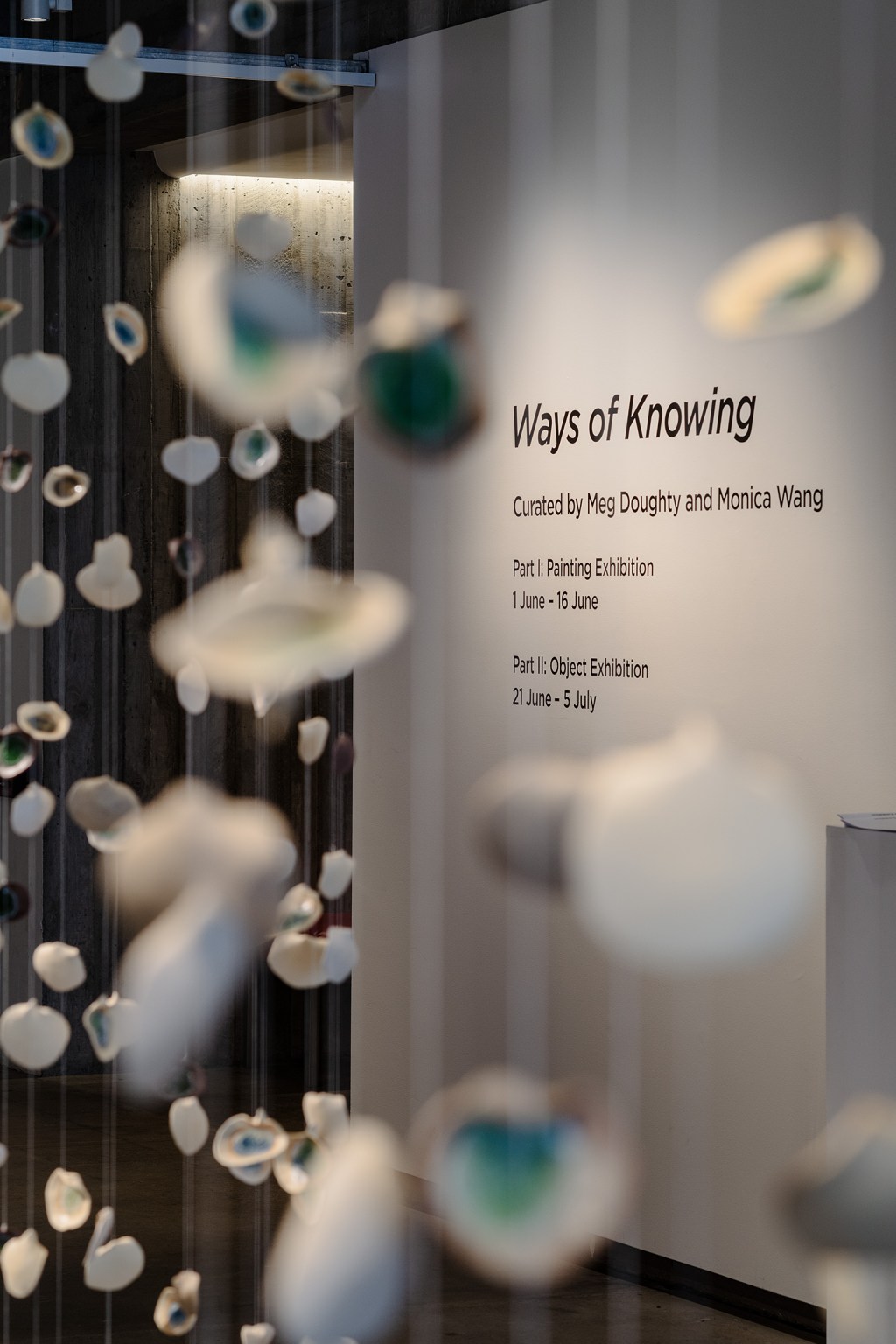
Taking inspiration from local ecologies, built or otherwise, the collection of works in this group show speak to each other with a haptic softness. Sculpted, cast, sewn, and painted, each object is evidence of a different material engagement. Mi Kyung Jang’s shells retain the curve of a palm and the pinched points made by a finger and thumb. The glass-made nacre of these shells, achieved often with beads, speaks to the shell’s stringing and the necklaces Jang’s grandmother would craft out of shells too. Rachel Ratten’s quilted waves of solid colour nestle together to form what could be a hillscape, a waterway, or leaves. The structured stitches layered over them, could be the paths creatures to take to roam this ephemeral dreamscape. The blues, silvers and greys of Colleen Altagracia’s stars lit up lend the gathered meditations on local ecologies an astral context, with all its mystic, navigational and technological weight. Grounding this energy, Amy Unkovich returns the visitor to the gallery. The metal frames made airy by their sky blue are proportionally taken from CoCA Toi Moroki’s own iconic brutalist concrete facade. The fabric that adorns one is a painted cloth, bunched together densely, while the already dense clay emulating fabric floats on top of another. Complemented by framed views in the form of painting, these material role-reversals invite a questioning of our built environments. Nearby, the visible hand marks rendered in a wax plain and a cast grasped clump of earth extend this conversation to the impact these environments have on the earth. This work of Rachel Sleigh’s sought to leave the places she took casts from as they were in a consciously decolonial practice.
In conversation these sculptural works are open about their own disparate elements, whether they be fabric strips, clay shells, cast earth, the stars themselves or steel supports. Individuals moving through the gallery are included as one such element. As people gather and make paths to be near to these art objects they make rivers through them, eroding any banks of isolation with their own bodies. This is part of our function, as Robert Macfarlane reminds us: as animals, humans are ‘track-makers’ (The Old Ways, 13). As we circulate through these works, like water running through swathes of dirt and rock, trickling life into its surrounds, we function as symbiotic organisms of this ecosystem. Macfarlane notes the ability of pathways to be ‘mediums in two senses: means of communion as well as means of motion’ (Ibid, 21) . In communion the artists, the art, and the visitor as participant in the show combine to generate its own interconnected web of being. Paths, as Macfarlane continues, offer ‘not only means of traversing space, but also ways of feeling, being and knowing’ (Ibid, 24).
 meg doughty